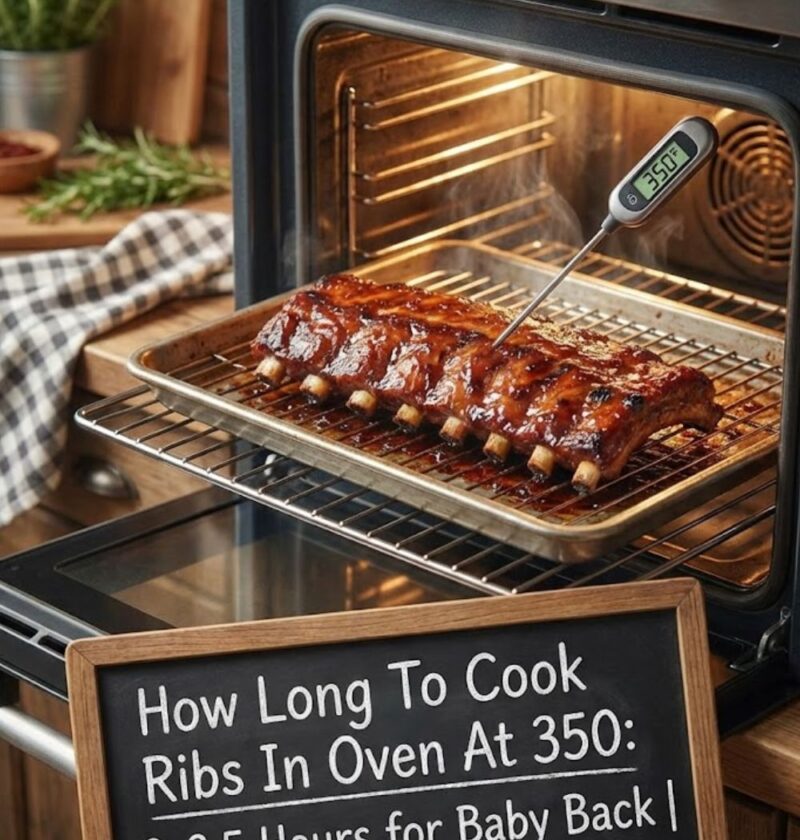
heat is strong enough to soften the meat but gentle enough to keep moisture inside. Foil, seasoning, sauce, and oven type can also change the cooking time. Below is a full guide with deep explanations.
Complete Cooking Time Breakdown at 350°F
| Rib Type | Average Time | Notes |
|---|---|---|
| Baby Back Ribs | 2–2.5 hours | Thinner and leaner → faster cooking |
| St. Louis–Style Ribs | 2.25–2.75 hours | Thicker ribs with more fat → slower cooking |
| Spare Ribs | 2.5–3 hours | Larger bones, more fat, longer time |
| Beef Back Ribs | 2–2.5 hours | Meat between bones, cooks evenly |
| Beef Short Ribs | 2.5–3.25 hours | Thick meat → longest cooking |
| Country-Style Ribs | 40–60 minutes | Technically not ribs, more like pork chops |
Covered vs. Uncovered Cooking Time
| Method | Time | Result |
|---|---|---|
| Wrapped in foil | Faster (2 hours) | Very tender, moist, steamy rib meat |
| Uncovered | Longer (2.5 hours) | Drier, crispier, golden surface |
| Foil then uncover | Best method | Soft ribs with caramelized top |
Most oven rib recipes use the foil first method because it protects the meat from drying.

Internal Temperature and Tenderness Chart
| Temperature | Tenderness Level | Explanation |
|---|---|---|
| 160°F | Firm | Safe to eat but not tender |
| 180°F | Softening | Better but still chewy |
| 190°F | Tender | Collagen starts melting |
| 195°F–203°F | Perfect | Pull-apart, juicy, ideal for BBQ ribs |
| 205°F+ | Very soft | May fall apart |
The key for ribs is NOT just being “safe” — ribs taste best when the collagen melts.
Why Ribs Need Long Cooking at 350°F
Ribs have a lot of connective tissue, which turns into gelatin when cooked slowly. At 350°F, this process speeds up without drying the meat.
350°F is the perfect mid-point because:
- It melts fat slowly
- It breaks down collagen faster than low heat
- It keeps meat juicy
- It forms a nice crust when uncovered

Bone Type and Size Matter
Baby Back Ribs
- Smaller, curved bones
- Lean meat
- Soft textures
- Fast cooking
St. Louis & Spare Ribs
- Flatter bones
- More fat
- Strong flavor
- Slow cooking needed for tenderness
Beef Ribs
- Bigger bones
- More connective tissue
- Rich beef flavor
- Long cooking required
Rib Thickness Table (How Thickness Changes Cook Time)
| Thickness | Extra Time Needed |
|---|---|
| Thin (Under 1 inch) | No extra time |
| Medium (1–1.5 inches) | +10–15 minutes |
| Thick (1.5–2 inches) | +20–25 minutes |
| Very Thick (Short ribs) | +40–60 minutes |

The Best Way To Bake Ribs at 350°F (Expert Method)
Step 1 — Remove the membrane
This tough skin stops flavors from entering. Slide a spoon under it and pull.
Step 2 — Pat dry and season heavily
Salt, pepper, paprika, garlic, onion, cayenne, brown sugar.
Step 3 — Wrap tightly in foil
You can add:
- A splash of apple juice
- Beer
- Vinegar
- BBQ sauce
- Broth
This creates a steam chamber.
Step 4 — Bake covered
Baby Back: 2 hours
St. Louis: 2.25 hours
Short Ribs: 2.5+ hours
Step 5 — Uncover and caramelize
Remove the foil, add BBQ sauce, and bake 20–30 minutes more.
Step 6 — Rest for 10–15 minutes
This keeps meat juicy.
How To Make Different Styles of Oven Ribs at 350°F
1. Fall-Off-The-Bone Style
- Cook wrapped for 2.5 hours
- Add liquid inside foil
- Finish uncovered for color
- Internal temp around 203°F
2. Chewy, Restaurant-Style Ribs
- Cook wrapped for 1.5 hours
- Uncover and finish for 40 minutes
- Don’t cook above 195°F internal temp
3. Crispy Dry-Rub Ribs
- Cook uncovered the entire time
- Lower time by 10 minutes
- Add broil for final crisp

How to Add Moisture for Juicy Ribs
Inside the foil, add:
- Apple juice (most popular)
- Pineapple juice (sweet ribs)
- Beef broth
- Water
- Cola
- Beer
These liquids steam the ribs and keep them soft.
Rib Cooking Time Calculator
Use this quick formula:
Base Time + Thickness Adjustment + Rib Type Time + Browning Time
Example:
St. Louis ribs, medium thickness →
135 min + 15 min + 25 min = 175 min (2 hours 55 minutes)

Sauce Timing
| Stage | When to Add |
|---|---|
| Early | Do NOT add sauce — burns |
| Last 20–30 minutes | Best time — sauce caramelizes |
| After cooking | For glossy finish |
Sugar burns easily, so timing is important.
How To Make Ribs Extra Flavorful
- Use mustard as a binder for rub
- Add smoked paprika for “smoked” flavor
- Roast garlic and mash into sauce
- Add brown sugar for caramelization
- Add a pinch of cinnamon or chili for depth
Common Mistakes That Ruin Ribs
1. Not removing the membrane
Makes ribs chewy and blocks seasoning.
2. Baking uncovered too long
Dries the surface and turns ribs tough.
3. Adding sauce too early
Causes burning and bitterness.
4. Not resting the ribs
Juices spill out and meat becomes dry.
5. Using too much liquid
Can wash off seasoning.

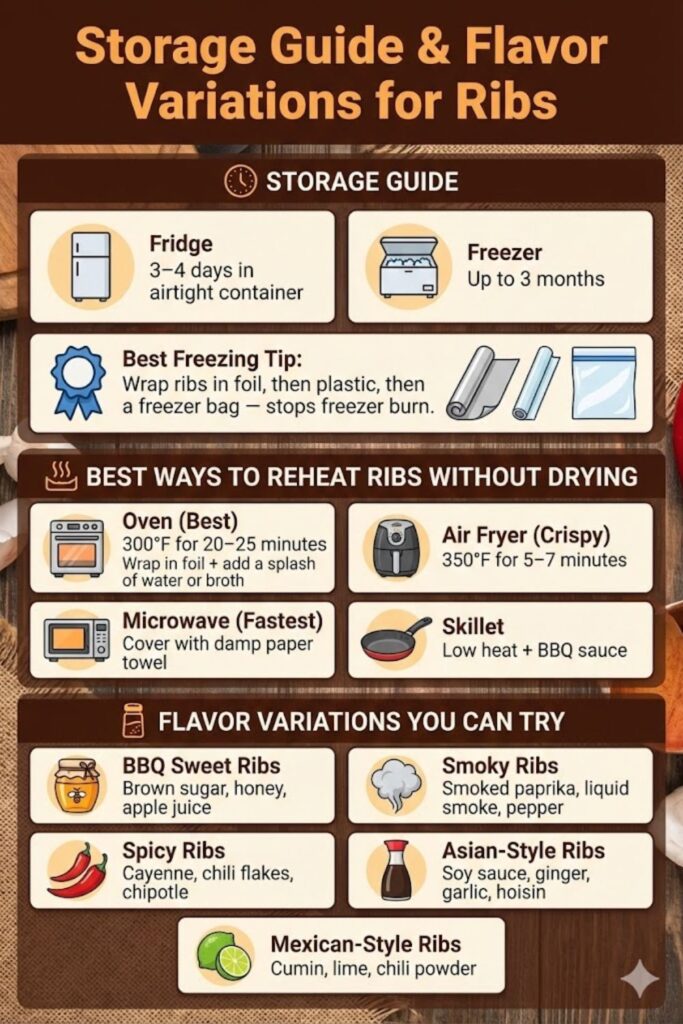
Storage Guide for Ribs
Fridge
3–4 days in airtight container.
Freezer
Up to 3 months.
Best Freezing Tip
Wrap ribs in foil, then plastic, then a freezer bag — stops freezer burn.
Best Ways To Reheat Ribs Without Drying
1. Oven (Best)
300°F for 20–25 minutes
Wrap in foil + add a splash of water or broth.
2. Air Fryer (Crispy)
350°F for 5–7 minutes.
3. Microwave (Fastest)
Cover with damp paper towel.
4. Skillet
Low heat + BBQ sauce.
Flavor Variations You Can Try
BBQ Sweet Ribs
Brown sugar, honey, apple juice.
Smoky Ribs
Smoked paprika, liquid smoke, pepper.
Spicy Ribs
Cayenne, chili flakes, chipotle.
Asian-Style Ribs
Soy sauce, ginger, garlic, hoisin.
Mexican-Style Ribs
Cumin, lime, chili powder.
FAQs
1. Is 350°F too hot for ribs?
No — it gives faster cooking and still tender meat if wrapped.
2. Should ribs fall off the bone?
They can, but true competition ribs keep a tiny bit of chew.
3. Do you flip ribs when baking?
No. In the oven, flipping is not needed because heat surrounds the meat.
4. Why do my ribs turn out dry?
Probably baked uncovered too long or not wrapped tightly.
5. How many racks can fit in the oven?
Usually 2–3 racks. Rotate them halfway for even cooking.
6. Can I cook ribs frozen?
Yes, but add 30–40 minutes extra and wrap tightly.