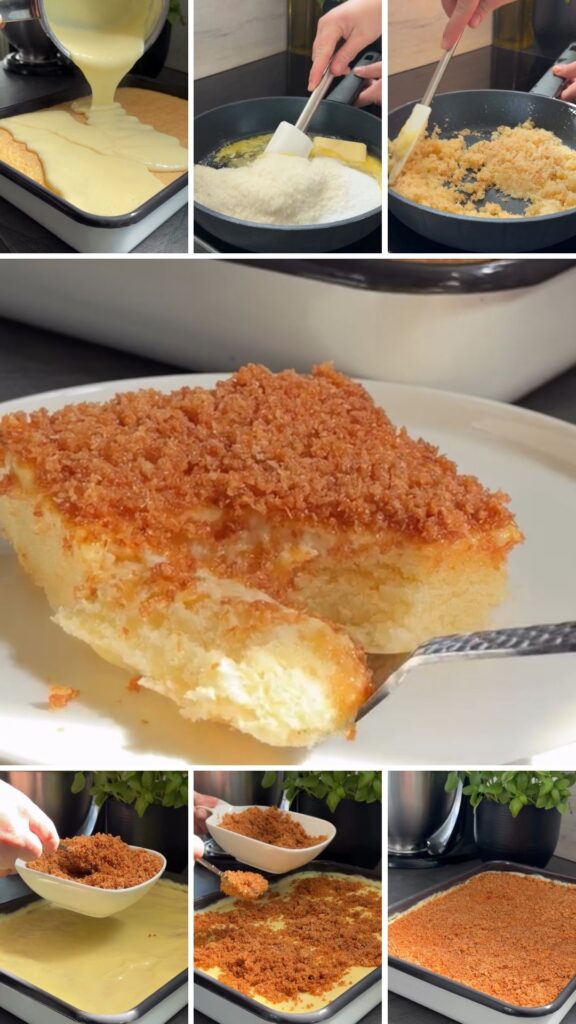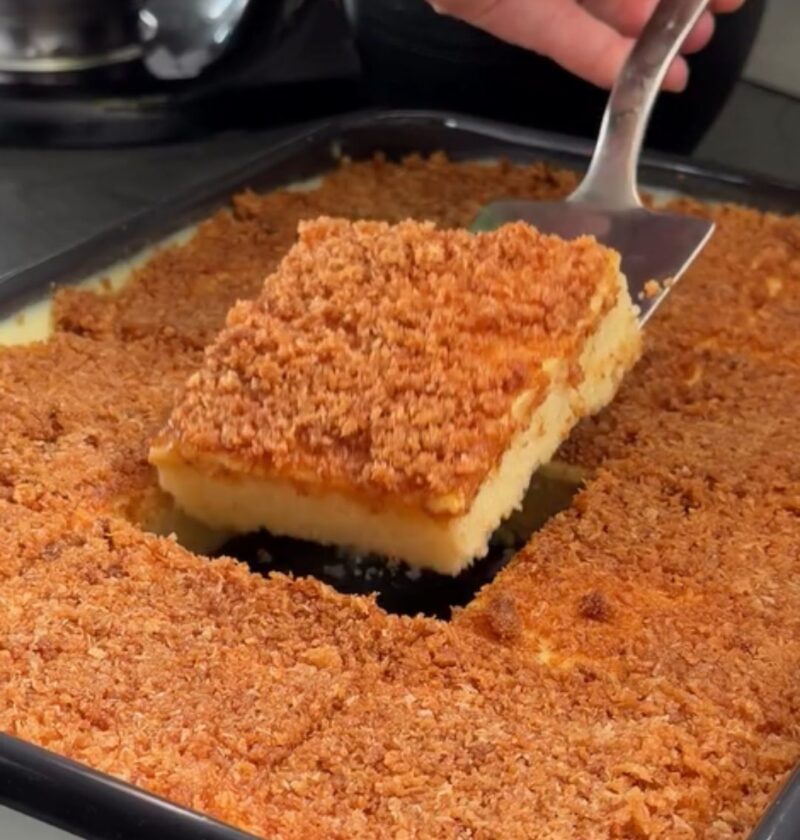
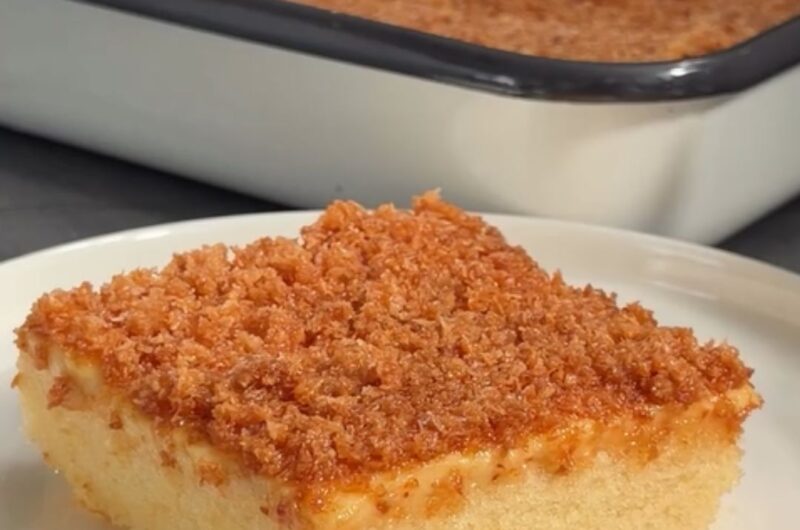
This Coconut Custard Cake stacks a soft sponge, smooth vanilla custard, and a crunchy toasted coconut layer into one easy sheet pan dessert. It bakes in a 30 x 40 cm tray at 175°C for about 20 minutes, so it feeds a crowd fast.
I came across this recipe on Instagram from ikosun_kitchen, and the method layers each component while the sponge is still warm from the oven. Sparkling mineral water goes into the batter instead of milk, which creates tiny air pockets that keep the base light and tender.
Spreading the hot custard over the warm cake is what bonds those two layers together. If you wait until the sponge cools completely, the custard just sits on top and slides off when you cut a slice.
Coconut Custard Cake Recipe
Course: DessertCuisine: AmericanDifficulty: Easy16
servings15
minutes25
minutes290
kcalA mineral water sponge baked in a sheet pan, covered with stovetop vanilla custard while still warm, then layered with butter-toasted shredded coconut and sugar for a caramelized golden finish.
Ingredients
- For the Cake:
300g flour
250g sugar
150g sunflower oil
150g sparkling mineral water
4 eggs (size M)
1 packet baking powder (15g)
- For the Custard Layer:
1 packet vanilla custard powder
500ml milk
1 tablespoon sugar
- For the Coconut Topping:
100g butter
100g shredded coconut
100g sugar
Directions
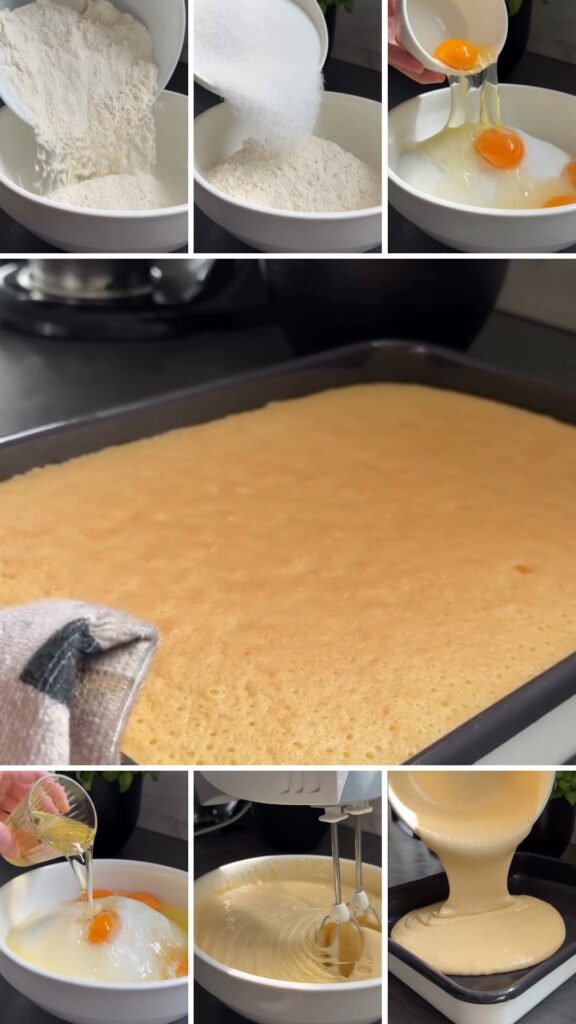
- Preheat the oven to 175°C (top and bottom heat) and grease a 30 x 40 cm baking tray.
- Place the flour, sugar, oil, mineral water, eggs, and baking powder in a bowl and mix with a hand mixer until smooth.
- Pour the batter into the prepared tray and bake for about 20 minutes, then check with a toothpick before removing.
- Mix the custard powder with 6 tablespoons of milk in a small bowl until smooth while the cake bakes.
- Bring the remaining milk with one tablespoon of sugar to a boil, remove from heat, stir in the custard mixture, then return briefly to a boil.
- Spread the hot custard over the still warm cake and smooth it out evenly across the surface.
- Heat the butter, sugar, and shredded coconut in a small pan, stirring constantly until golden and lightly toasted.
- Spread the toasted coconut mixture evenly over the custard layer.
- Cool the cake completely before cutting into pieces and serving.
FAQs
Why does the recipe use sparkling mineral water in the batter?
The carbonation creates tiny air bubbles that make the sponge lighter and softer without needing extra eggs or butter. Still water does not lift the batter the same way, so the texture ends up denser and heavier. Use freshly opened sparkling water so the bubbles are still active when you mix.
Can I use a different size baking tray?
A smaller tray gives you a thicker cake that needs a few more minutes in the oven, so always check with a toothpick. A larger tray spreads the batter thinner and may only need about 15 minutes to bake through. The 30 x 40 cm size gives the best sponge thickness for holding the custard on top.
Why do I spread the custard while the cake is still warm?
Warm sponge absorbs the bottom of the custard slightly, which bonds the two layers so they hold together when you cut a slice. If the cake cools first, the custard sits loosely on top and slides off. This same warm-layering approach works well in sheet cakes like Strawberry Cream Sheet Cake.
How do I know when the coconut topping is toasted enough?
Keep stirring the coconut, butter, and sugar over medium heat until it turns a golden color and smells nutty. It can go from golden to burnt in seconds, so never walk away from the pan during this step. Pull it off the heat as soon as it looks right, because residual heat darkens it a bit more.
Can I make this cake the day before serving?
The flavors and textures actually improve after a night in the fridge because the custard sets firmer and the sponge softens. Cover the tray tightly with plastic wrap so the coconut topping does not dry out overnight. Bring it to room temperature for about 20 minutes before serving for the best taste.
Can I swap the sunflower oil for butter in the sponge?
Melted butter works as a substitute and adds a richer flavor, but the sponge will be slightly denser than with oil. Oil keeps cakes moist longer because it stays liquid at room temperature while butter solidifies once cooled. Try using half oil and half melted butter for a good balance, similar to Pound Cake.