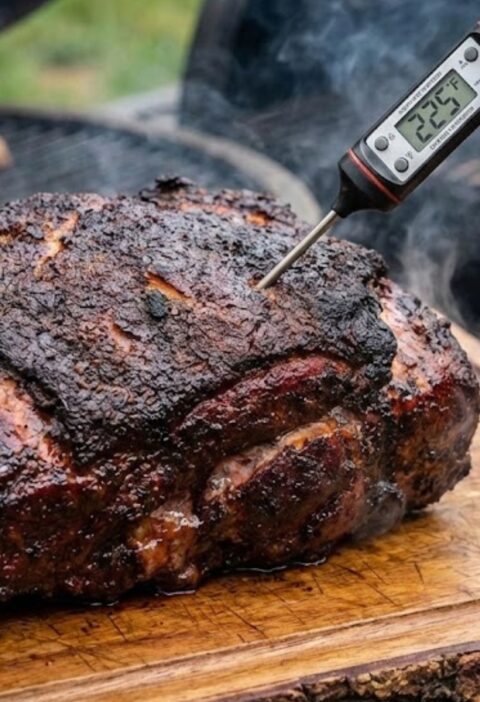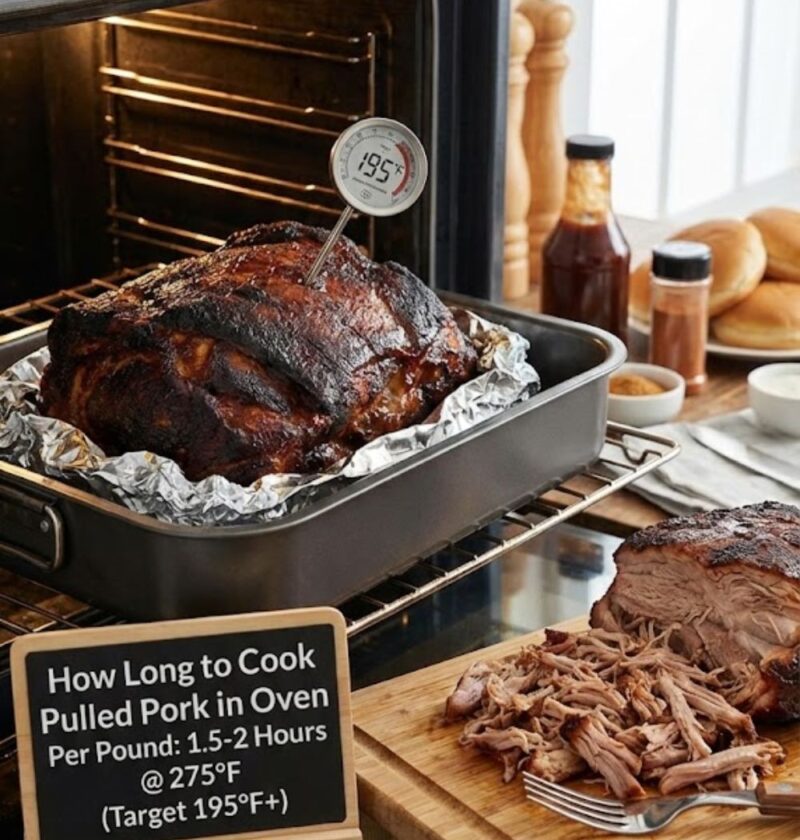
Pulled pork cooks low and slow. In the oven, you should cook pork shoulder or pork butt at 250°F–325°F, depending on how tender you want it. The time changes based on temperature, size, fat content, bone-in or boneless, and how tightly it is wrapped.
General rule:
Pulled pork takes 1.5 to 2 hours per pound at 250°F,
1 to 1.25 hours per pound at 275°F,
and 45–60 minutes per pound at 300–325°F.
But time alone isn’t enough — the real goal is to reach an internal temperature of 195–205°F, where collagen melts and the meat becomes shreddable.
Below is the full deep guide.
Time Per Pound Chart for Pulled Pork (Oven)
| Oven Temp | Time per Pound | 4-lb Pork Butt | 6-lb Pork Butt | 8-lb Pork Butt |
|---|---|---|---|---|
| 225°F | 2–2.5 hrs/lb | 8–10 hrs | 12–15 hrs | 16–20 hrs |
| 250°F | 1.5–2 hrs/lb | 6–8 hrs | 9–12 hrs | 12–16 hrs |
| 275°F | 1–1.25 hrs/lb | 4–5 hrs | 6–7.5 hrs | 8–10 hrs |
| 300°F | 45–60 min/lb | 3–4 hrs | 4.5–6 hrs | 6–8 hrs |
| 325°F | 35–45 min/lb | 2.5–3.5 hrs | 4–5 hrs | 6–7 hrs |
275°F is the sweet spot for perfect tenderness + reasonable time.

Why Time Per Pound Is Not Always Accurate
Pulled pork is unique because it’s not finished when it’s “safe.”
It’s finished when the collagen melts, which happens above 190°F.
Several things affect the cooking time:
1. Bone-in vs. Boneless
- Bone-in cooks slower but stays juicier
- Boneless cooks faster but can dry out
2. Fat Content
Fattier pork butts take longer but produce better pulled pork.
3. Wrapping
- Wrapped in foil/butcher paper → cooks 20–30% faster
- Unwrapped → bark becomes crisp but slows the cook
4. Stall at 160–170°F
Pulled pork always hits a “stall” where the temperature stops rising for 1–3 hours.
This is normal because moisture evaporates from the meat and cools it.
5. Oven Accuracy
Most home ovens are wrong by 10–25°F, which changes total cook time.
Internal Temperature Breakdown (Key to Perfect Pulled Pork)
| Temp | What Happens |
|---|---|
| 160°F | Meat is cooked but still firm |
| 170–180°F | Collagen starts melting slowly |
| 190°F | Meat begins to soften |
| 195–203°F | Perfect shredding stage |
| 205°F+ | Extremely soft, may fall apart |
Target: 195–203°F for perfect pulled pork.

Best Oven Temperature for Pulled Pork
Although you can cook pulled pork at many temps, here’s what you get:
225°F
Very slow, super juicy, best smoke-like texture.
250°F
Balanced: good tenderness + reasonable time.
275°F
Most recommended — faster cooking and perfect shredding.
300–325°F
Good when you’re in a hurry but risk of dryness is higher.
Example Cooking Times (Real-Life Scenarios)
6-pound pork butt at 275°F
- Time: 6–7.5 hours
- Then rest: 30–60 minutes
- Total: ~7–8.5 hours
8-pound pork shoulder at 250°F
- Time: 12–16 hours
- Slowest and most tender method.
4-pound boneless pork butt at 325°F
- Time: 2.5–3.5 hours
- Good for weeknight pulled pork.

The Foil Wrap Method (“Texas Crutch”) Makes It Faster
When the meat hits 160–170°F, wrap it tightly in foil.
Benefits:
- Cuts cooking time by 25–30%
- Softens meat more evenly
- Prevents dryness
- Helps push through the stall
Step-by-Step Guide for Oven Pulled Pork
1. Prep the meat
Pat dry, remove excess fat, apply seasoning heavily.
2. Preheat the oven
Use 250°F or 275°F for best results.
3. Slow cook until the stall
Let pork rise to 160–170°F. This takes hours depending on size.
4. Wrap it
Wrap tightly in foil or parchment + foil.
5. Continue cooking to 195–203°F
This is when shredded pork becomes soft and juicy.
6. Rest the pork
Let it rest 30–60 minutes, still wrapped.
This keeps the juices inside.
7. Shred and season
Add BBQ sauce, vinegar, broth, or seasoning to taste.

How to Know When Pulled Pork Is Done (Without Thermometer)
If you don’t have a thermometer, check:
- Bone wiggles easily
- Meat shreds with light pressure
- Fork twists in the meat effortlessly
- Juices run clear
Time alone is not enough — tenderness is the real judge.
Why Pulled Pork Needs a Long Rest
Resting helps:
- Redistribute juices
- Lower internal temp slowly
- Make shredding cleaner
- Improve flavor
Wrap in foil + towels and rest 30–60 minutes.

Common Mistakes When Cooking Pulled Pork Per Pound
1. Relying only on time
Every pork shoulder is different. Always check tenderness/temp.
2. Not wrapping during the stall
This slows the cook dramatically.
3. Cutting off too much fat
Fat = flavor + moisture. Leave at least ¼ inch.
4. Cooking at too high a temperature
325°F or higher dries out lean parts.
5. Not resting the meat
Skipping rest = dry, uneven shredded pork.
6. Using a small roasting pan
Crowding prevents heat circulation.
Flavor Tips for Extra-Rich Pulled Pork
Add moisture
Inside the foil, add:
- Apple juice
- Chicken broth
- Coke
- Pineapple juice
- Beer
Create bark
Cook unwrapped for the first part before wrapping.
Add vinegar
A splash of apple cider vinegar after shredding balances the fat.

How to Store Pulled Pork
- Fridge: 3–4 days
- Freezer: 2–3 months
- Store with leftover juices to keep moist.
How to Reheat Pulled Pork Without Drying
Oven
250°F, covered, 20–30 minutes
Sprinkle broth or sauce on top.
Stovetop
Low heat with added liquid.
Microwave
Use a damp paper towel to keep moist.
Air Fryer
Good for crispy edges → 350°F for 4–6 minutes.

FAQs
1. Is one hour per pound enough for pulled pork?
Only at high temperatures like 300–325°F. For low and slow cooking, you need 1.5–2 hours per pound.
2. Does pork shoulder cook faster wrapped?
Yes, wrapping speeds cooking by 25–30%.
3. What size pork butt is best for pulled pork?
6–8 pounds is ideal because it cooks evenly.
4. Can I cook pulled pork overnight?
Yes — use 225°F for 12–16 hours for large roasts.
5. How do I keep pulled pork moist in oven?
Wrap tightly, cook low, don’t skip resting, and add moisture if needed.